Category Archives: Public History

The 93rd Caller

stanjeffIn the fall of 1981, the Rolling Stones were at the height of their power. With one exception they were all in their thirties, they had just released a new album that summer, “Tattoo You,” with its best-selling single “Start Me Up” climbing the Billboard charts (it would reach #2), and they launched a major North American tour in September of that year, the first to ever have a corporate sponsor, Jovan Musk. Rock tours up to that time were usually bacchanalian carnivals, and it was quite a stretch for a large company to attach its name to one. With Keith Richards finally clean and sober, the Stones behaved themselves and a new trend of corporate sponsorship began.

The tour kicked off in Philadelphia on the afternoon of September 25—big stadium shows were almost always during the day then, because they didn’t have to turn on the lights—and demand for tickets for every show, in every city, far exceeded supply.

The opening acts were hardly the usual no-names or struggling new bands, they were rock giants themselves—ZZ Top, Van Halen, Journey, and others like them. In fact that opening concert in Philadelphia featured a relative newcomer who was booed off the stage after just two songs, a young African-American male who used just his first name—Prince, may he rest in peace.

It was the first concert tour for the Stones where they reached deep into their catalog and played songs from all three decades of their existence. When it was all over three months later, the 50 shows made it the highest-grossing concert tour in history up to that time, with $50 million in ticket sales, in a time when the average ticket went for $16. In the days before the internet, Stones fans had to stand in long lines or mail in their requests for tickets on postcards, and most went empty handed. Needless to say, there was no harder ticket to get that fall than to see Mick and the boys.

Every show was played in either an arena or a stadium, in front of anywhere from 15,000 to 50,000 fans—with one exception. When the Stones came to Atlanta, they announced that they would play in the Fox Theater, the marvelous old movie palace on Peachtree, built in 1929, that seated only 4,600+ people. Tickets went on sale at 2:30 in the morning a couple of weeks before, with no advance warning. Again, in the days before the internet, the only people who got the relatively tiny amount of tickets available were those who got to the Fox Theater box office at that hour of the morning. Most were bought by Georgia Tech students, as they were the only ones awake and close enough to get tickets. One radio station in Atlanta, Z-93, received a few tickets to give away as a promotion.
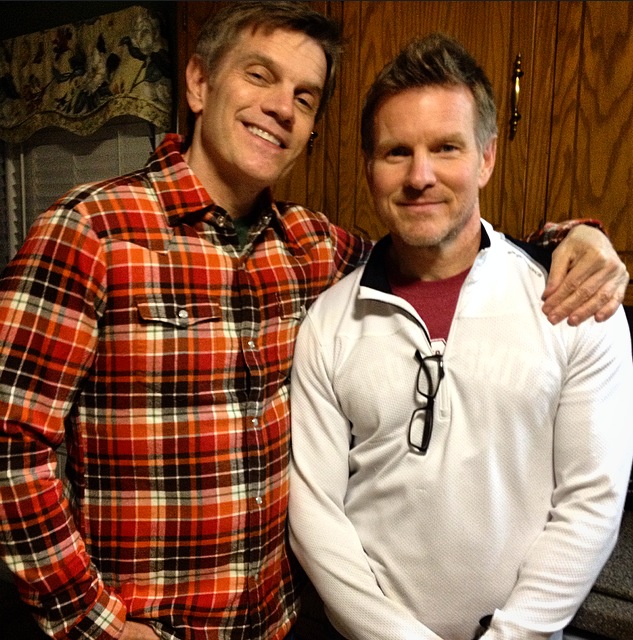
jeffstanIn Athens, Georgia, my brother Jeff was a 21-year old college senior at the University of Georgia, majoring in journalism. He wasn’t particularly a Stones fan, but this was a cultural phenomenon that he didn’t want to miss.

The weekend before the Stones played Atlanta, Z-93 started periodically giving away tickets to the 93rd caller. My brother stayed awake all weekend, listening, and every time the announcement came, he would frantically dial long distance, striking out every time. What are the odds of being exactly the 93rd caller?

The concert was on a Monday night; at 6:30 a.m. on that Monday morning, bleary-eyed from lack of sleep, Jeff wearily dialed the phone again after another announcement. A busy signal. He dialed again. The phone rang. The voice on the other end answered: “You’re the 93rd caller. You’re going to see the Stones!”

Jeff skipped his classes that day and drove the 120 miles from Athens to Atlanta to pick up the tickets at the station. When he got there, everyone in the office, including the DJ, came out to see him; tickets were so scarce, even the people who worked there couldn’t get them.

Jeff had lots of friends and now owned two tickets that made him one of the most popular people in Georgia. He could have scalped that second ticket for a lot of money.

I was a senior in high school, a month away from my 17th birthday. When I got home that afternoon Jeff was standing in my parents’ living room holding up two tickets and said to me, “You wanna go see the Rolling Stones tonight?”

In such moments lives are changed forever. The rest of the story of that glorious night, October 26, 1981—the legendary concert and how I became a Stones lifer—is the subject for another essay. What matters here is that, at that moment, and for all time, my brother entered into the Sibling Hall of Fame, and there is nothing I can ever do for him that would equal that moment for me.

But the truth is, Jeff attained Olympian status long before that October Monday in 1981.
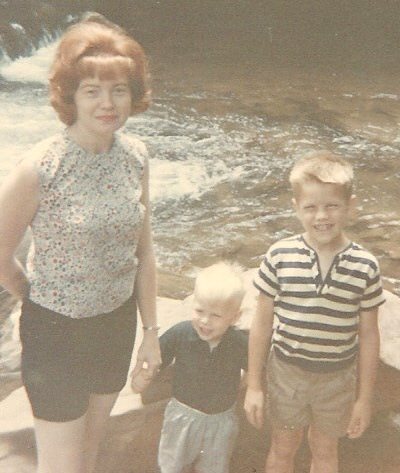
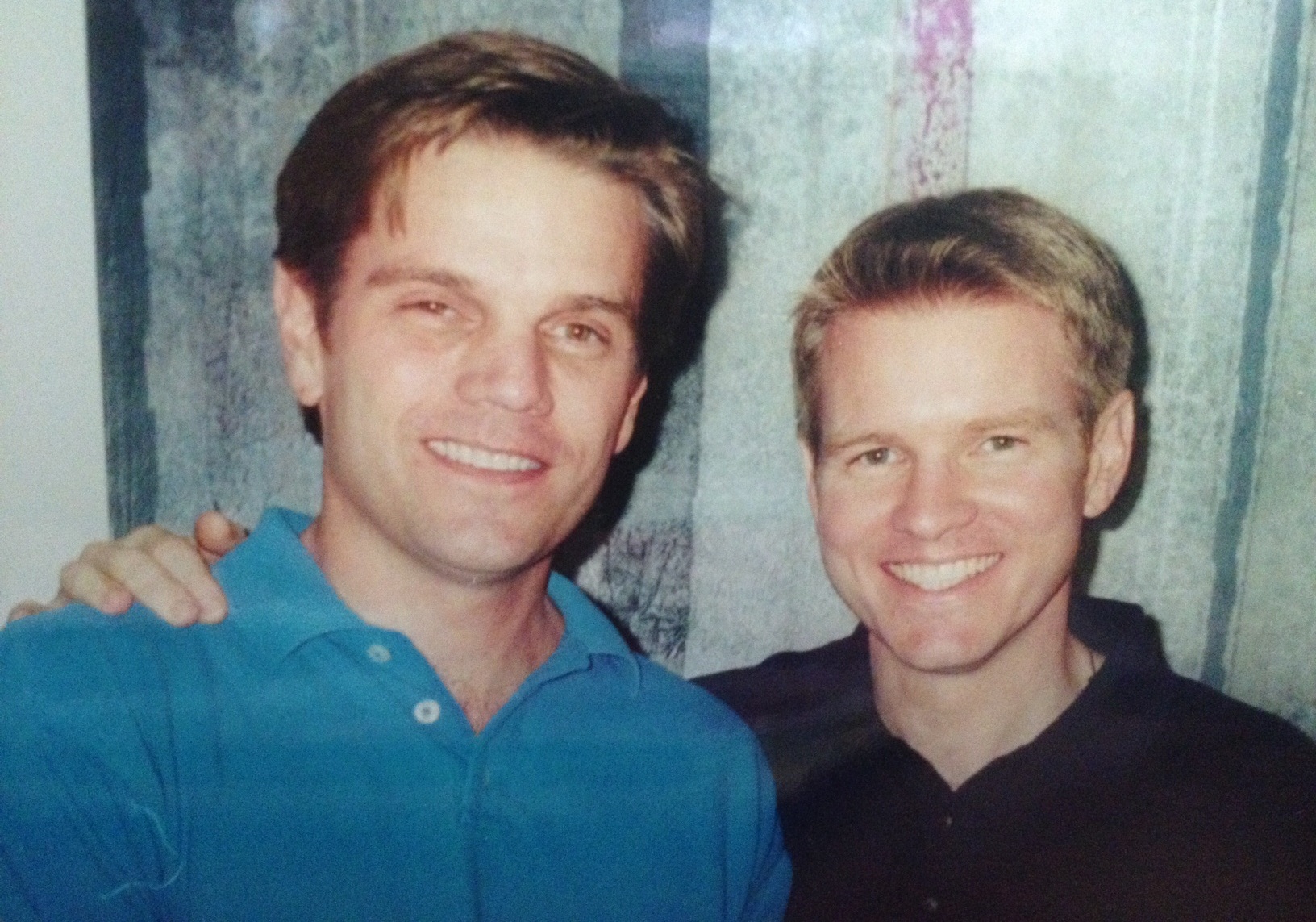
1966Siblings play a unique role in our lives. They remember what you remember, share what you’ve shared in ways that friends, no matter how close, do not. If they are older than you, they are one of the few people in your life—parents being the others—whom you cannot remember meeting for the first time. They’ve just always been. They are part of you.

Growing up, I wasn’t always happy about having an older brother. When he wasn’t picking on me, he was always being taller than I was, smarter, and better looking. He is still all of those things. He made honor roll every year in school, and I don’t ever remember him studying, or doing any homework. I made honor roll once, in 10th grade, and it strained my mental capacity to the point that I’m still trying to recover. We also had to share a bedroom together for most of our youth and that was never any fun, particularly when I had an earlier bedtime.

But Jeff was and is so much more than an annoyingly talented big brother. Your parents are your first teachers, of course, but in many ways Jeff played that role for me.

It was Jeff who gave me the key to the golden door when he taught me how to read before I ever started 1st grade. How he did it I do not now remember, but he did. To say it opened up the world to me would be an understatement. Words and books have been my life ever since.

He brought the world into our house in tiny Snellville, in more ways than one. Long before the internet, cable, and satellite radio and TV, he had a short-wave radio in our shared bedroom and we listened to stations all over the world. He had an insatiable interest in languages and cultures different than our own. While I was content to explore the universes of Marvel and DC comics (or make up my own stories in my own brand of comics), Jeff listened to the world, and he still does.

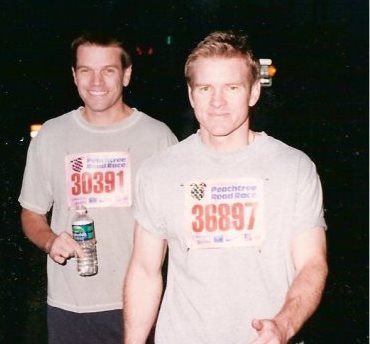
To my mind, he was and is a one-man United Nations. He casually learned Greek from an 8thpeachtree grade teacher and eventually studied and became fluent in Spanish, French, Italian, and German. He brought home from school visiting exchange students that he had befriended from Peru, Germany and other far-flung exotic places. He had pen pals overseas, one of whom, Lorraine, visited us from Britain in the summer of 1980, and she became like a member of the family. And as soon he had saved up enough money to do so, he traveled to Europe and has never stopped returning. He spent one summer attending the Sorbonne, the University of Paris, and has traveled and lived in places all over the map, the sand never quite settling down in his shoes.
It was Jeff who introduced me to rock and roll in the summer of 1972. We listened to WQXI 94 FM and 79.1 AM that summer and discovered the aural riches of Three Dog Night, Bread, Nilsson, Arlo Guthrie, Chicago, Neil Diamond, Don McLean, Elton John, and so many more. We pretended we had our own radio station—WSNE, for Snellville—and we both played DJ. He introduced me to European bands that I never would have known about otherwise, from Boney M to the Midnight Dynamos.

Whenever I had school projects that were beyond me—which was almost any school project that required anything that had to be put together, or drawn or built—he did it for me. I can’t tell you how many times I struggled and flailed with some ridiculously complicated project the night before it was due, only to have him swoop in at the last minute and save me, effortlessly completing some geometry project or drawing on a poster. I’d still be in 7th grade if not for him.

When I was in first grade, long before Today in Georgia History, I had designs on hosting my own TV show, modeled on my favorite, “The Mr. Pix Show,” which aired on Saturdays on Atlanta’s Channel 5, WAGA, hosted by Dave Michaels. No problem at all. Jeff designed a TV studio for me in our basement. It was just construction paper and cardboard all pasted on the wall, but I thought it was the neatest thing I’d ever seen. Jeff and I even appeared on one episode of the real “Mr. Pix Show” in early 1971. What I’d give to be able to find that in an archive somewhere.

He built a haunted house with our neighbor Don Denny on the vacant lot next to our house at Halloween one year and in our basement in another, and they charged all the kids in the Napaneighborhood to go through it. His creativity and entrepreneurism has paid off handsomely: he now owns his own successful video production company.
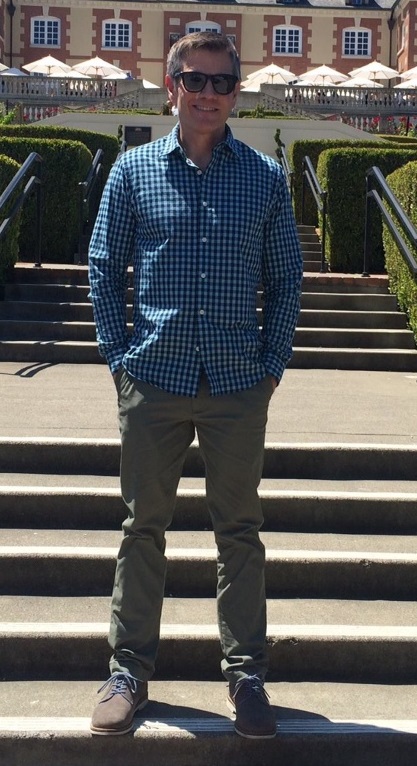
Talented, smart, resourceful, creative—he is all of these things. And as the Stones story illustrates, he’s generous too, although “generous” doesn’t do him justice. To wit:

When he was 17 years old, Jeff took his 12-year-old little brother to see Star Wars when it came out in the summer of 1977. One of the greatest movies of the 20th century, and he didn’t leave me at home.

My very first concert? The Eagles, on Sunday, November 11, 1979, on their “Long Run” tour. My 19-year-old brother took me.
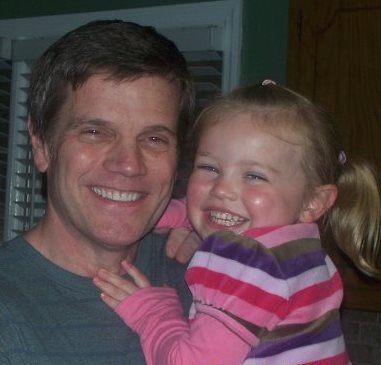
Jeff and EllieYou give him socks for Christmas, he gives you a television. That’s how he is. It was Jeff who gave me my first iPod, my first iPad, satellite radio, laptop computer, and my first flat-screen high-def television, all given as Christmas gifts through the years. In my family we still rely on him to be the one who installs my parents’ computers or any new electronic device, or to navigate the internet or troubleshoot Wi-Fi.

He has absolutely spoiled my daughter, who loves him like a second father. Should anything ever happen to her parents, that is exactly what he will be.

But Jeff’s generosity extends far beyond resources or gifts.  Just one example among thousands: Many years ago, Jeff was a constant and solitary fixture at the bedside of a dear friend whose jeff cognacown family had abandoned him as he lay dying much too young from a tragic disease. Jeff was there till the very end and our beloved friend died, not alone, but surrounded by love and compassion. I thought then and I think now that Jeff’s own deathbed, when it comes, will be the easier for the comfort, peace, and grace he gave to our friend’s.
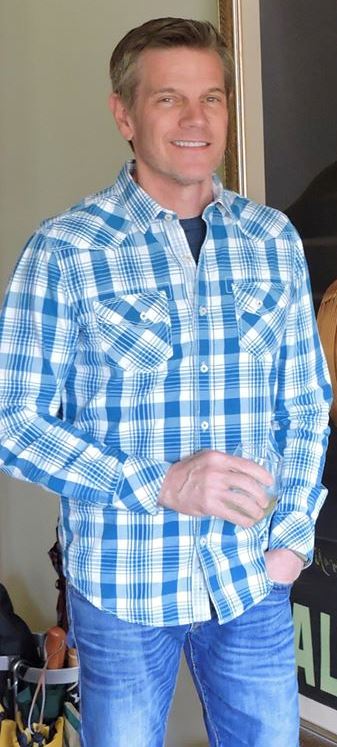
This is the place where I should interject to tell you that no, he’s not perfect. I wish I could tell you that he’s pushed little old ladies into traffic or had a habit of running over small animals, but alas, neither would be true. Growing up he had the famous Deaton temper, but he seems to have even lost that here these latter years. As I noted earlier, he picked on me when we were young, as older brothers will, though he never let anybody else do it. (That all stopped one memorable day in our teens. Ask him sometime about that punch.) But he always protected me. I’m sure he has other faults now, other than always being in great shape and looking like a model, but I don’t know what they are.

George Clooney recently said of his friend and fellow actor Bill Murray, “Everybody’s life is a jeff moonpuzzle that’s missing this one piece, and he fits in each time.” That’s Jeff. Ask his friends and they will all say the same thing.  He brightens every room he walks into, and when you see him, you always think, Jeff’s here now. Everything’s going to be okay. You feel better after even a casual conversation with him. It’s an amazing impact to have on other people, and he does it effortlessly every day. The picture at right captures his personality perfectly.
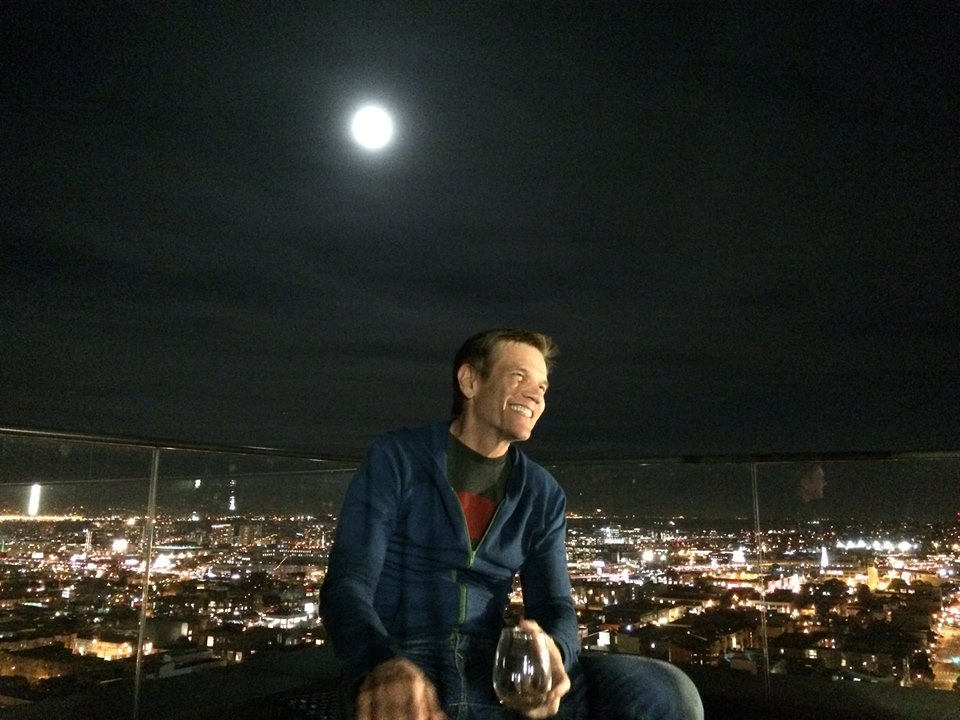
So here’s to my big brother Jeff, who just celebrated a birthday. He was there when my parents jeff winebrought me home from the hospital, he helped me to learn to walk, he taught me to read, and his steps have continually lighted the way in front of me. As we continue down the path and the evening shadows lengthen, I trust he will be there at journey’s end.  It wouldn’t be like him to let me wander alone in the dark.
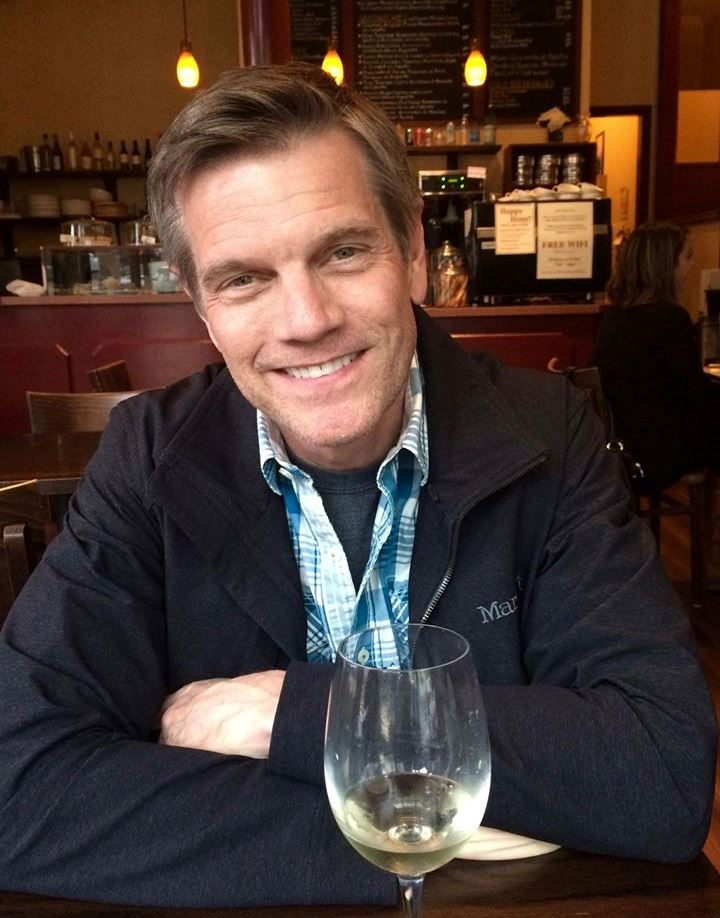
From our earliest days, he opened the world up to me in ways I never would have experienced without him. He also opened up his heart, and I love him beyond all telling.

What are the odds on having a brother like him? With Jeff, I’ve felt like the 93rd caller every day of my life.

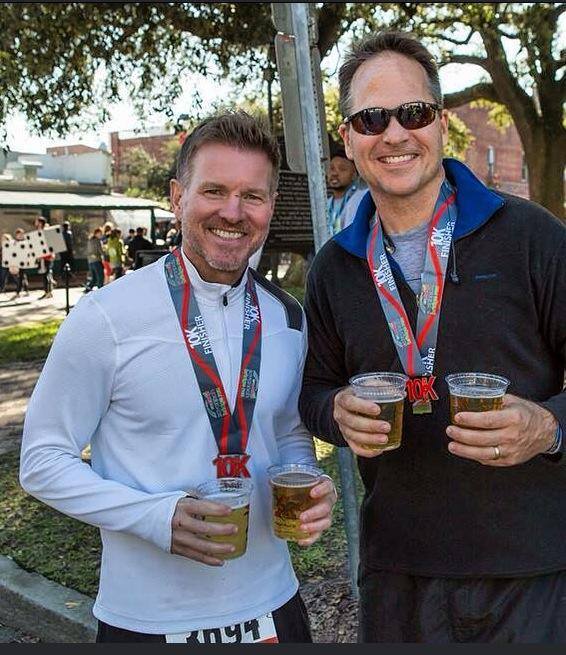
Higher Ground

Come all you no-hopers, you jokers and rogues
We’re on the road to nowhere, let’s find out where it goes
It might be a ladder to the stars, who knows?
Come all you no-hopers, you jokers and rogues.
Port Isaac’s Fishermen’s Friends, “No Hopers, Jokers, and Rogues”

stan-photo2Hello again. As long-suffering and loyal readers of this blog (both of them) well know, it’s been eight long months since my last entry. There are many reasons for that silence, some of which I’ll write about in the New Year—my involvement in the national discussion about Confederate memorials and iconography in public spaces, three glorious Rolling Stones concerts this summer, not one but two GHS public programs about Leo Frank in the summer and fall, the Georgia History Festival Kickoff lecture in October on the real Mad Men and the world they created, and a host of other things that make my job so interesting. As the year draws to its close, it seemed like a good time to say a quick hello and goodbye to 2015, to take stock of the year, take a peek at what might lie ahead, and to set a few goals for the New Year. A few musings at the end of the year, in no particular order:

Sports: In a blog post from last January, I praised the high-flying Atlanta Hawks and wondered how far they’d go. The answer turned out to be the Eastern Conference finals, farther than they’d ever been, and in which they got swept by the far-better Cleveland Cavaliers. They’re looking good this year too, but the lack of a true big man may yet be their undoing. Stay tuned.

As you well know, the Falcons started out 5-0 and yet will not make the playoffs for the second straight year, having squandered that glorious start by losing six straight games. But let’s give Dan Quinn time to build his own team; better things ahead here.

As hard as it is to believe, I think the same is true of the Braves. They’ve traded everyone on the team who had talent except for Freddie Freeman, and they played stink-ola baseball for most of last season and undoubtedly will again in the one to come. But some analysts are now predicting that the recent trades—as painful as they’ve been—are setting the Braves up to be the next Kansas City Royals or Houston Astros, young teams on the rise and winning championships. Cheers to that. I lived through the not-too-shabby years in the 1970s and have no desire to do it again.

Finally, there’s the Mark Richt firing/mutual parting. I’ve been as vocal as anyone that it was high time for a change at UGA, but after the Dogs finished 9-3 this year I thought there was no way it would happen. But it did, among much angst and hand-wringing and gnashing of teeth. As is required whenever discussing Richt, we must first say that he is a nice guy. A great guy. A man who’s done great things at the University of Georgia. But I’ve always maintained that there are lots of coaches who could take Georgia’s talent and win 9 or 10 games. Let’s see if we’ve finally got one who can win 12 or 13.

And with the college football playoffs beginning tonight, as an unabashed SEC fan I say: Roll Tide.

Books: I’ve read many great books this year that enlightened, informed, and entertained. Here are just a few of the ones I’d recommend:

Thomas Paine, The Age of Reason (1794-95): Thomas Paine was an 18th-century equivalent of Donald Trump, a bomb-thrower extraordinaire who in just a few words could set the settled order of nature on its ear. Unlike Trump, Paine was a disciple of the Enlightenment and a fervent believer in breaking the chains that had bound men in body and mind since time immemorial. Whether in Common Sense, The American Crisis, or The Rights of Man, Paine was a caustic critic of anything that smacked of orthodoxy. This book, published in several parts beginning in 1794, was one of his last great works, but instead of kings and governments, he chose the biggest target of all: religion.

It is not for the faint of heart, a literary broadside against the belief in revealed religion and what he calls a “superstitious” belief in a supernatural being who created the Earth in seven days and continues to dabble in our daily affairs. He throws down the gauntlet right at the beginning: “I do not believe in the creed professed by the Jewish church, by the Roman church, by the Greek church, by the Turkish church, by the Protestant church, nor by any church that I know of. My own mind is my own church.” Institutionalized religion, Paine argues, are “human inventions set up to terrify and enslave mankind, and monopolize power and profit.”

Paine’s ideas weren’t new, but his engaging style of writing brought Deism down to the level of the common man and made it all the more dangerous and radical for that. His ideas are still terrifying to many people. After more than two hundred years, Paine’s ideas are still extremely unpopular and considered dangerous in much of the America of 2015 that fervently believes that this is a Christian nation and that our elected leaders should be Born Again. At a time when we’re having a broad discussion about the place and role of religion in our national lives, this is a great and timely read. Whatever your beliefs, it will, like all great books, challenge you to stand on new ground. I highly recommend it.

Charles Dickens, The Posthumous Papers of the Pickwick Club (1836-37). You can never go wrong with Dickens. One of the great glories lying ahead of me in my life is the pleasure of reading all of his works, fiction and non-fiction alike. I’ve read Great Expectations, A Tale of Two Cities, David Copperfield, and of course many of his Christmas stories. Unencumbered by the thought process, as our NPR friends Click and Clack used to say, I think this one is the best of them all. Unlike many of Dickens’ books, it’s not depressing—except for the fact that he could write so well and with such penetrating insight into the human condition at the tender age of 24—and in fact is hilarious. Here are the exploits of Mr. Samuel Pickwick and his companions Tracy Tupman, Nathaniel Winkle, and Augustus Snodgrass—and the irrepressible and singular Samuel Weller—as they travel around England, meeting some of the most interesting characters ever conceived along the way—Alfred Jingle, the residents of Dingley Dell, Joe the Fat Boy, Mr. Wardle, and many others. This one is a feast that I’m still working on and not anxious to finish.

Clayton Rawson, Death from a Top Hat (1938): A classic locked-room mystery, the first of four featuring the Great Merlini, a magician and amateur sleuth. It’s exactly what it sounds like: a body is found in an apartment with all the doors and windows sealed. He was strangled but how did the murderer leave? One of the best locked-room mysteries ever and great nightly bedtime reading. The classic Dell paperback is hard to find but this and the others in the series are all available on Kindle. A great way to drift off to the land of Morpheus.

Washington Irving, Bracebridge Hall, or The Humorists (1822). I first dipped into this book sitting in my favorite swing by the side of Lake Trahlyta at Vogel State Park on a warm August afternoon, but I saved it for the cooler days and darker nights of November, for which it’s better suited. It’s a collection of Irving’s short stories published under his pseudonym Geoffrey Crayon and supposedly collected when Crayon visited his friend Frank Bracebridge for his wedding in England. It follows up The Sketchbook of Geoffrey Crayon, which first introduced the Bracebridge family (and which featured Sleepy Hollow and Rip Van Winkle as bonuses), and preceded Tales of a Traveller.The collection contains some of the classic descriptions of the English countryside and the people who live there that made Irving famous and features some of his best stories—”The Stout Gentleman,” “The Haunted House,” “The Storm Ship,” and “Dolph Heyliger” among them. As lauded as Irving is for “The Legend of Sleepy Hollow,” his other writings go mostly unread today, and they shouldn’t.  When the leaves turn golden in November, I always reach for him.

Yes, I read history and biography too, fear not. In preparing for the Georgia History Festival Kickoff Lecture on “The Birth of the American Dream” and the real Mad Men who created it, I reread David Halberstam’s The Fifties (1993). Halberstam is above all else a reporter and storyteller, and his descriptions of the people and events of that decade are exceptional. For a more detailed historical study, I turned to a volume in the Oxford History of the United States series, James Patterson’s Grand Expectations: The United States, 1945-1974 (1996). Both of these books clock in at over 800 pages, so they aren’t light reading, but they’re both well worth your time. You can’t hurry through them and you don’t want to. Linger in the land of Lucy, Elvis, and The Bomb.

Reaching back to an earlier period, I also read Edward Larson’s The Return of George Washington, 1783-1789 (2014), coupled with the first volume of James Thomas Flexner’s classic multivolume biography of Washington, George Washington: The Forge of Experience, 1732-1775 (1965). Surprisingly, given the fame of Flexner’s set and his authoritative position in the Washington canon, I preferred Larson’s elegant and graceful prose, covering a period of Washington’s life that is often overlooked, the years between the American Revolution and his presidency. Larson convincingly argues that without Washington’s backing there never would have been a Constitution, demonstrating the enormous influence he had on the final document just by his presence in the room. Highly recommended.

This past year certainly hasn’t lacked for materials for the historian who plies his trade in the public realm. From the ISIS atrocities that bore eerie similarities to events in this country a century ago when African Americans were burned alive, mutilated, and lynched, to the mass shooting in Charleston that led to a national discussion of the role of Confederate iconography in American life, to the rise of Donald Trump, an egomaniacal “strongman” with echoes in Huey Long, Joseph McCarthy, and George Wallace, there has been plenty to comment on and write about as we try to sort out and make sense of the events in our daily lives and their historical antecedents. This next year will bring more of the same no doubt, as we enter a presidential election year that promises to be one of the most interesting and pivotal in our nation’s history. More on all of this anon.

Turn off your engines and slow down your wheels
Suddenly your master plan loses its appeal
Everybody knows that this reality’s not real
So raise a glass
To all things past
And celebrate how good it feels.
Port Isaac’s Fishermen’s Friends, “No Hopers, Jokers, and Rogues”

Next Year: For the New Year, I certainly have goals, if not resolutions. Any time of the year is a good time to set a goal (just like any day is a good day to start a diet), but since the New Year is the traditional time for clean slates, we’ll play along.

In 2016, I want to be more patient, especially with my daughter but also with everyone in my life, including the jerk in the car in front of me who’s driving too slow, or the maroon (as Bugs Bunny said) in the car behind me who wants me to drive faster.

Next year I hope to be more empathetic and sympathetic towards other people and their daily struggles and concerns. In memory of my friend Will, I need to pay more attention to the silent sufferings of other people.

Next year I’d like to find the courage to spend at least one hour every week visiting people that I don’t know in nursing homes and assisted living centers. They are among the most depressing places on Earth and are usually shunned by everyone who doesn’t need to go there. It’s hard to go there. And that’s one reason I’d like to start trying, to visit and spend time with people who have no one to talk to. I hope I have the courage to do it, and having written it down here in this public blog, perhaps I will. It’s a goal for 2016.

I’m so glad that he let me try it again
Cause my last time on earth I lived a whole world of sin
I’m so glad that I know more than I knew then
Gonna keep on tryin’
Till I reach my highest ground
Stevie Wonder, “Higher Ground”

runningI have the usual goals next year that I have every year: Exercise more. Run more. Read more. Write more. Listen more. Hike more. Bike more. Talk less. Eat less. Complain less. Argue less. Get angry less. Watch TV less (except for “Better Call Saul,” “Fargo,” and the upcoming “X Files”). To pick up the phone and talk to someone I haven’t talked to in a long time. To renew friendships and make new ones. To try on a daily basis, as Thomas Jefferson so eloquently put it, to take life by the smooth handle. To meet life and its challenges and opportunities with stoicism. To try, as Marcus Aurelius said, to arise each morning and remember what a precious privilege it is to be alive.

To one and all who have read a single word or every word of this blog since it began on October 15, 2013, and who have supported me along the way and given me a word of encouragement, thank you. I’ll see you here much more frequently in 2016. Cheers to you all.

We Salute You, and Farewell

EBPWe at GHS are mourning the loss of a good friend, Elizabeth Brown Pryor, a gifted writer and historian, killed in a car crash in Richmond, Virginia, on Monday, April 13.

Elizabeth was the author, most recently, of Reading the Man: A Portrait of Robert E. Lee Through His Private Letters, which received the prestigious Lincoln Prize among many other awards following its 2007 publication. It was a landmark book that, as fellow historian Kevin Levin says, “was a major kick in the [rear] at just the right time.” Elizabeth tapped into a vein of Lee documents stashed away for decades and gave us an entirely new and provocative way of viewing the controversial Confederate chieftain. She came to Savannah and spoke to a packed house in 2007 and returned in 2010 to take part in a four-week GHS Summer Seminar on new viewpoints on the Civil War.

She came to Savannah not only to discuss Lee, but also her book, Clara Barton, Professional Angel, with K-12 teachers in several Teaching American History workshops . An eloquent speaker with a rare combination of charm and scholarly rigor, she was always gracious with friend and critic alike, and there were many who took exception to her portrait of Lee. Generous with her time, she won converts as only a seasoned former State Department eb pryordiplomat could.

In 2014, the Georgia Historical Society began a new GHS Distinguished Fellows program to recognize scholars of national repute for their accomplishments and scholarship, and for their service and friendship to GHS. Elizabeth was on our list to receive this honor.

Her untimely death is a tragedy for her friends and family and for all who love history. For those of us who aspire to make a difference in the world through the written and spoken word, her loss as a role model—and friend—is deeply felt. Ave atque vale.

Mr. Smith Goes to War: The Curious Case of the Fighting 50 Year Old

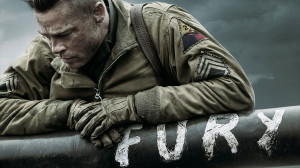
Movie Review: Fury (2014) Starring Brad Pitt, Shia LaBeouf, Logan Lerman, Michael Pena, and Jon Bernthal. Written and directed by David Ayer.

“War is cruelty and you cannot refine it.”—William Tecumseh Sherman

furyThe World War II movie has been around as long as the war itself. Hollywood began churning out anti-Nazi flicks even before combat began in Europe in 1939, and from the moment Japanese bombs fell on Pearl Harbor Tinseltown was all in. Some of its best efforts, like Casablanca, weren’t even about war, but about how the conflict disrupted lives and displaced lovers.
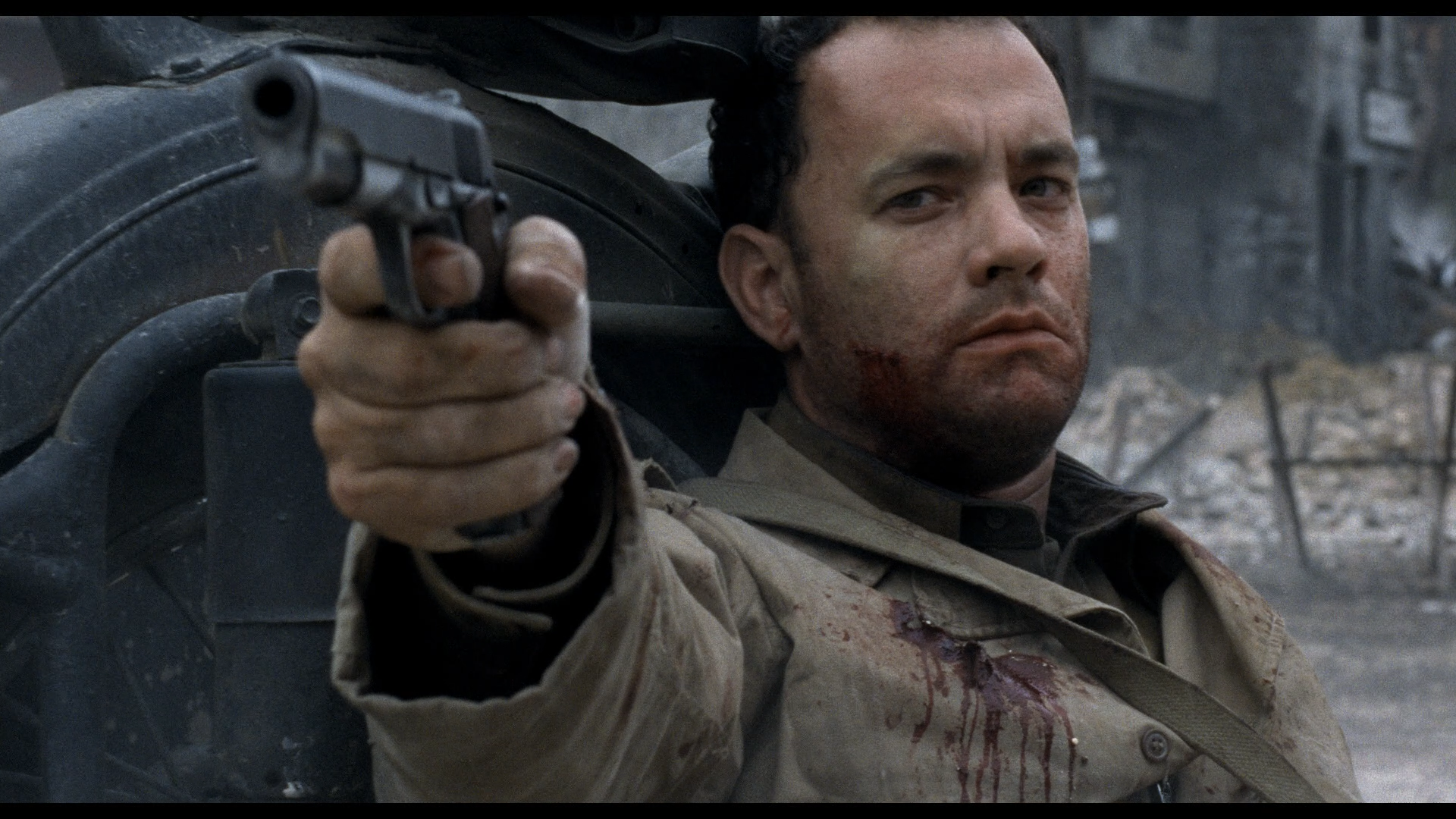
We could review some of the films that came out during the war (and some of them were quite good), but one movie released 53 years after the war’s end changed everything. Steven Spielberg’s Saving Private Ryan in 1998 took combat on film to a level and anscreenshot-med-02 intensity never seen before, and no movie made after it can hope to pretend to anything other than farce if it doesn’t measure up.
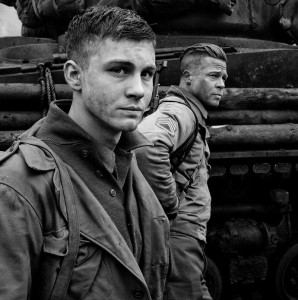
To be sure, other films before that—particularly Oliver Stone’s Platoon (1986), Spielberg’s Schindler’s List (1993) and Michael Mann’s 1992 version of Last of the Mohicans—brought a sense of realism to the violence and trauma of war that hadn’t been present before. But the opening twenty minutes of Private Ryan, which recreated the D-Day landings of June 6, 1944, were harrowing and graphic in a way that left audiences riveted and many veterans traumatized. I saw it six times in the theater and many times since on DVD and its impact remains unchanged.

Now comes David Ayer’s Fury, released October 17. The story of a American tank crew in the last days of the War, the movie stars Brad Pitt and a nice ensemble cast, and it follows the genre in all its clichés perfectly.

Brad Pitt;Shia LaBeouf;Jon BernthalThe World War II buddy movie has a time-worn formula that movie makers are loathe to give up. You’ve seen it many times. The squad is made up of a motley and diverse cast of characters who all make jokes at each other’s expense but who of course love each other and are bonded by combat. There is always a wisecracking New Yorker with a Brooklyn accent; a Midwesterner, usually nicknamed “Iowa” or “Nebraska”; a Southerner, often a sharpshooter (think Sergeant York), who dryly quotes scripture almost every time he’s on screen and putting a bullet in somebody’s head. He is invariably nicknamed something like “Hillbilly” or “Tex”; a hard-boiled, brooding leader with a mysterious background who ends up usually hailing from either Pennsylvania or the Midwest and turns out to be either a mailman or a baseball coach before the war; and finally, one member who passes for a minority, either a Jew or a Hispanic.

Very early in the film one standing member of the group will get killed and will inevitably be replaced by a green-as-a-Granny-Smith-apple fury-008rookie who a) has never seen combat), b) is usually anti-violence and loathe to kill, no matter the circumstances and c) becomes the squad egghead and/or resident sissy who quotes poetry or will be seen reading a book of some kind during a lull in combat. This fellow’s manhood will be questioned, will be found wanting, will be put to the ultimate test, and he will, in the end, be the only one standing.
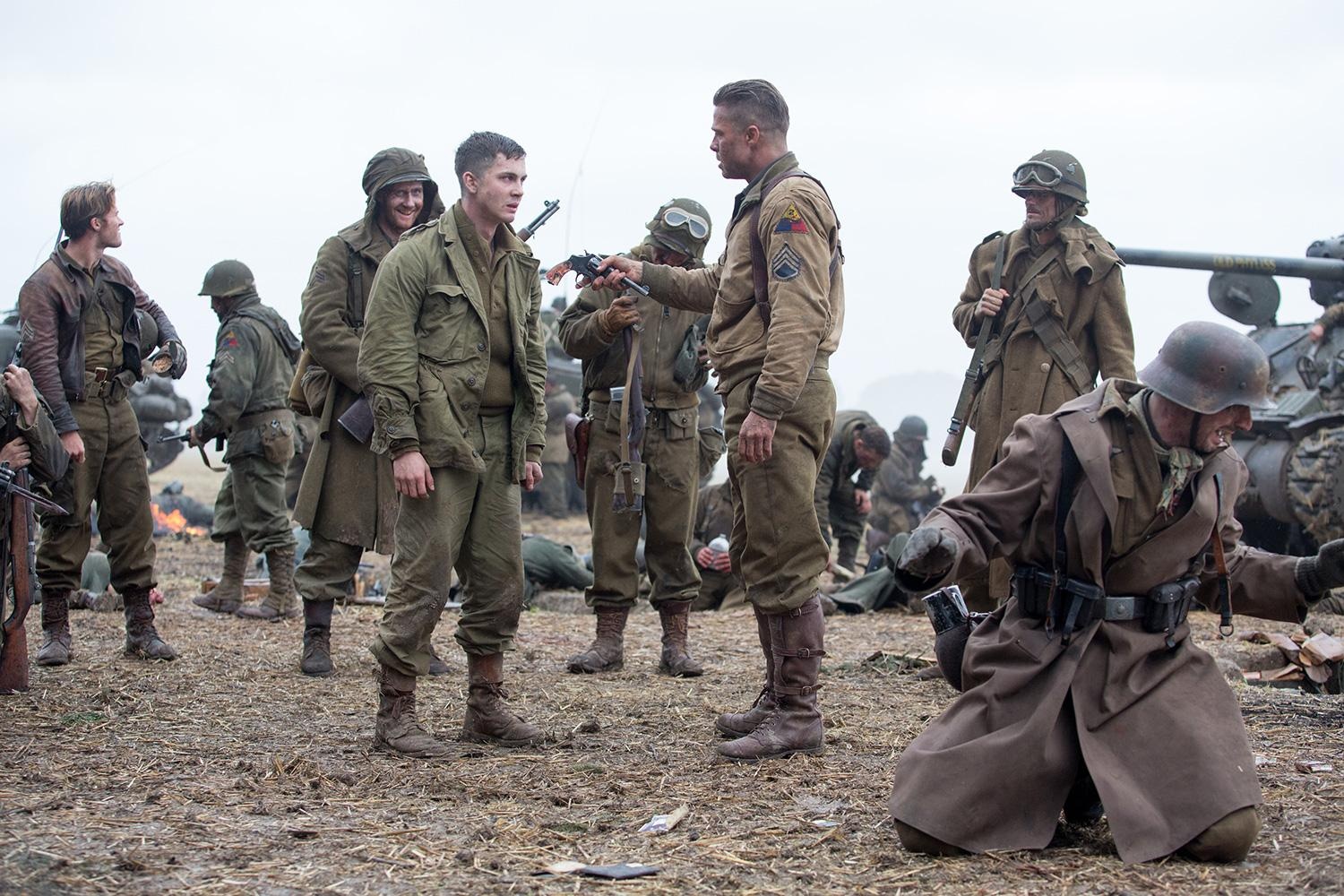
Also part of the formula: the squad will fight for most of the picture as part of a larger unit but near the end of the flick they’ll find themselves cut off from everyone else and forced to make a hard choice: run and try to re-join the larger group or stand and fight and face near-total annihilation while serving the larger cause. Guess which one they choose?

Saving Private Ryan, for all its combat realism, followed this formula right down to the last fury-movie-screenshot-016-1500x1000moment, and Fury does too. Unlike Spielberg’s film, however, Ayer’s offering is no love letter to the generation that fought the Big One. This is all about Sherman’s quote that began this blog—war is hell, and you cannot refine it. The movie opens with violence and follows it through right to the end, and you’re not always sure what the larger story arc is, other than survival. And that’s precisely the point. By April 1945, when this movie takes place, most combat veterans just wanted to make it to the end; whatever larger, overarching theme there is in this movie is juxtaposed with the soldier’s will and desperation to survive—another minute, another hour, another day, to make it to war’s end, and then back home again.

Saving Private RyanThere are of course things wrong with this movie, starting with the fact that there were no 50-year-old tank commanders in World War II. None. Nada. Zilch. If you were 50 years old and in the U.S. Army, you were a general. You were nothing else. Even Tom Hanks was beyond the age, at 42, of a captain in Private Ryan. Grizzled and weary WWII combat soldiers were 28.

To Brad Pitt’s credit—and this soon-to-be-50-year-old is eternally grateful—he makes you forget he’s 50. He’s as plausible in this role as he’s ever been in anything he’s done in his long career, and in this instance his pretty-boy looks and youthfulness serve him well. Those same attributes often make you overlook the fact that he’s a fine actor, but this time he makes the most of them without making that the reason you cheer for him.

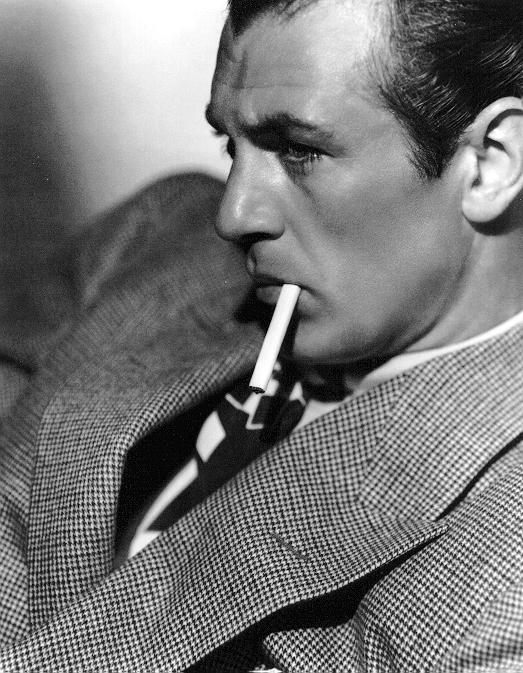
CooperTo my mind, this role is a turning point in Pitt’s career. He is as close now to what passes in Hollywood for a Gary Cooper or a Clark Gable—the man who, when he is on the screen, commands your attention without even opening his mouth. Pitt does that numerous times in this movie, sometimes quite literally taking command of a situation that threatens to explode right in front of you, and he never even moves. If George Clooney is our modern-day Cary Grant, and Tom Hanks is Jimmy Stewart, Pitt is Coop, The King, Errol Flynn, and in some ways Henry Fonda all rolled into one—a character with an earnest but quiet dignity that evokes the best moments of those stars from Hollywood’s golden era.

One thing this movie does well is muddy the waters of the narrative of the American G.I. Whatever else Stephen Ambrose would have us believe about the American soldier as liberator, there are moments in this film when one wonders how excited the German civilians were to see the Americans roll into town. War obliterates all rules, and even the most civilized people can be brutalized and desensitized by unrelenting violence. Fury demonstrates this well. Ayer’s G.I.s are not the sort of people you’d meet at an ice-cream social, and Americans or no, there’s no mistaking the reality that Western Civilization itself was a casualty of this war.

Another point that is well made in this film: American military personnel did not take any German S.S. as prisoners. Members of the S.S. were trained killers, and they were treated as such, a point made repeatedly in all the recent movies and mini-series. Watch for it here too.

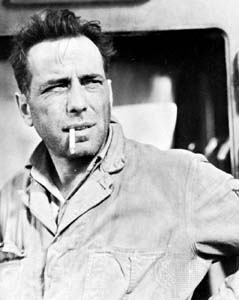
Is this the best WWII tibogart001p1ank movie ever made? Nope. Since this is a blog about history, my money is still on Humphrey Bogart’s 1943 classic, Sahara, which employed all the buddy war-movie clichés but with a United Nations cast, and with Bogart’s ultra-cool, towering performance that still stands over 70 years later. Every generation needs to interpret World War II for itself and let its stars stand in for those of yester-year, whether it was Bogart, George C. Scott as Patton, Clint Eastwood in the Vietnam-era Kelly’s Heroes, Tom Hanks, and now Brad Pitt.

In the end, what we’re left with is the sense that the war was big, messy, and traumatizing for all those who fought in it. Those who survived were damaged too, in different ways. It’s hard to come away from this film—or any other good one about war—and not be convinced that however necessary it might sometimes be, it always destroys more than it preserves.

This movie too, like its predecessors, reminds us—and we always need reminding—that, as Bruce Catton so eloquently put it, when the Great Challenge comes, the most ordinary among us will rise up and do great things. But the cost will always be high. As the World War II generation literally disappears from our sight, we’re haunted by the question of what all those young men left lying on WWII battlefields—and indeed from all wars—might have achieved if they had been allowed to return to a world without war.

Summer Reading

318846_270958346259684_1649991259_nAugust is here, and that means all sorts of things. For Braves fans, it means you brace yourself for the Annual August Flop, and sure enough, right on schedule, the swoon has begun. For college football fans, it means the long wait is almost over. And for we happy yet sweating denizens of Charm City, it means breaking out the kayaks for the evening commute after the drenching, frog-strangling storms that drop 3 inches of rain in 20 minutes every afternoon, hard on the heels of three-digit heat indices.

August also means that, despite the unrelenting heat and humidity, summer is winding down. The unofficial end is a mere two weeks away on Labor Day but if you define summer by summer “vacation,” it’s already over at my house, where school started on August 7. It was 96 degrees that day, by the way. There’s lots of things wrong with that, but then nobody asked me if we should start school that early. If you define summer by temperature, summer in Savannah will last at least 3 more months. But let’s not turn this essay into another rant about the weather, shall we?

adirondack-chair-at-theI’ve always found the notion of “summer reading,” once you’re out of K-12 or college, to be a relatively useless term. What adult has more time to read in summer than in any other season? Unless you are blessed—and I won’t name any names or occupations—to not have to work in the summer, I’ll wager you actually have less time to read in that season than in any other. The kids are out of school and they keep you busy. Longer days mean more time to do things outside and probably less time reading. Weekends are filled with yard work and other more pleasurable outdoor activities. Personally, I find the cooler afternoons and longer nights of autumn and winter to be more conducive to reading, but that’s just me. I suspect the notion of having more time to read in summer comes from “beach reading” that publishers like to promote, and the lofty idea that people take along stacks of books and actually read when they’re on vacation. If you read the rest of the year, you probably read on vacation. If you’re not a reader, you won’t read on the beach or anywhere else you vacate to. Readers read, no matter the season.

But the term “summer” reading also refers to seasonal reading, of course, and this idea has more traction–we read different things at different times of the year. Is that true for you? I wrote an essay for this blog last October about some great books to read around Halloween, and there are any number of books that make great reading during the Christmas season and on cold winter nights. Here’s what I’ve been reading this summer, broadly defined as Memorial Day to Labor Day:

World War I: With the 100th anniversary of the start of the war upon us this month, there is lots of good new scholarship being published on all aspects of the conflict. Here’s a few that I’ve picked up recently: Christopher Clark’s The Sleepwalkers: How Europe Went to War in 1914; Geoffrey Wawro, A Mad Catastrophe: The Outbreak of World War I and the Collapse of the Habsburg Empire; David Crane, Empires of the Dead: How One Man’s Vision Led to the Creation of World War I’s War Graves; Britt Buttar, Collision of Empires: The War on the Eastern Front, 1914; Max Hastings, Catastrophe 1914: Europe Goes to War; Margaret Macmillan, The War That Ended Peace: The Road 519CEHZDulL._SY344_BO1,204,203,200_to 1914; and Sean McMeekin’s July 1914: Countdown to War.

This is a just a short list of some of the new stuff that’s out, and if it’s any indication, there’ll be a slew of new books over the next four years to mark the centennial of the Marne, the Somme, Flanders, Verdun, the Argonne, and Versailles, not to mention reassessments of all other aspects of battles, the carnage and personalities involved, and the war on the home front and its aftermath.

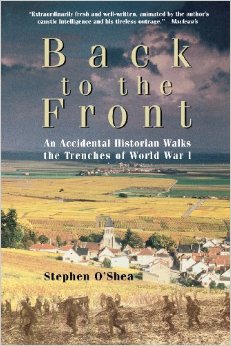
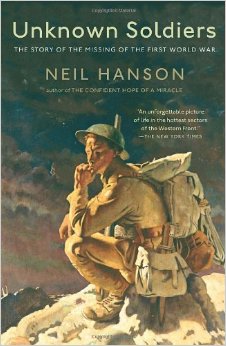
face-battle-I’m giving a couple of upcoming talks on the centennial of the First World War, so I used that as an excuse not to dig into the new books but to re-read three compelling books that I enjoyed the first time around and that I now consider classics: Unknown Soldiers: The Story of the Missing of the First World War (Knopf, 2005) by Neil Hanson; Back to the Front: An Accidental Historian Walks the Trenches of World War I (Avon, 1996) by Stephen O’Shea; and John Keegan’s The Face of Battle (Penguin, 1976). Keegan’s account of Agincourt, Waterloo, and the Somme is the best known, but all three offer riveting accounts of the slaughter of an entire generation and the scar the Great War left on the 20th century. 518GyI2OXlL._SY344_BO1,204,203,200_Hanson’s book in particular highlights how the unprecedented carnage of 37 million casualties changed the way societies memorialize the men who fought and died, and how those memorials institutionalize the trauma of coming to terms with the hundreds of thousands who have no known grave. All are highly recommended as we contemplate the continuing meaning of the Great War in our lives.

The Great Books: In 2008 I subscribed to Easton Press’s list of the “100 Greatest Books Ever Written,” and I read three offerings this summer: Frankenstein, or the Modern Prometheus by Mary Wollstonecraft Shelley; Fathers and Sons by Ivan Turgenev; and The Red and the Black by Stendhal. Shelley’s gothic novel, first published in 1818, is not at all like the camp versions served up by Hollywood, which is a real shame. It seems to me that there have been many missed opportunities to get this story about the creation of life and what, in the end, makes us human, on film. 81orVm5uyULI remember the 1973 made-for-TV movie, Frankenstein, the True Story, though critically lampooned, as coming closer to the novel than Boris Karloff ever did. Stendhal’s work is rightly hailed as a groundbreaking novel, one of the first to explore the psychological dimensions of its multi-layered characters. The three books each feature some of the most memorable characters in literature: Victor Frankenstein and his unnamed Creature (not at all like the Golem featured in films); the young Nihilist physician Bazarov in Turgenev’s 1862 novel of generational conflict; and the ambitious climber Julien Sorel in Stendhal’s 1830 realistic classic. Are they three of the greatest books ever written? Read and decide for yourself.

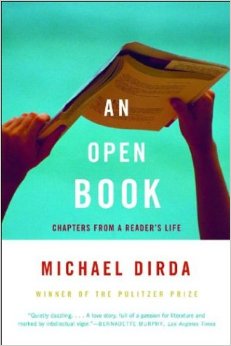
Autobiography: Washington Post book reviewer and Pulitzer Prize winner Michael Dirda is one of my favorite writers and I’ve devoured everything he’s published. He is, in my humble opinion, 410VSZZXTHL._SY344_BO1,204,203,200_the best American literary critic writing today; you can find him every Wednesday in the Post, the New York Review of Books, and online on The American Scholar and Barnes and Noble reviews. His books of essays have brought dozens of great reads into my life—new ones and overlooked classics. This summer I came across a copy of his memoir, An Open Book: Growing up in the Heartland (2003), a heartfelt tribute to a lifelong love of reading and the printed word that began in Lorain, Ohio. If you haven’t already, get to know Michael Dirda.

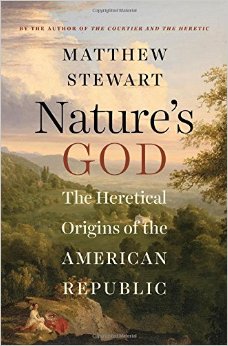
History: Nature’s God: The Heretical Origins of the American Republic by Matthew Stewart (W.W. Norton, 2014) A full review of this book is forthcoming on this blog, but suffice it to say that this is a very controversial book (or will be to many people who read it) and is a full-throated rebuttal to those who insist that the United States was founded by Christians as a 51YU-l46UbL._SY344_BO1,204,203,200_Christian nation. Read this one and discuss with your book club if you want to liven things up.

Bedtime Reading: Finally, what to read before turning out the lights? I save the heavy stuff for the early mornings. Clifton Fadiman, he of The Lifetime Reading Plan fame, wrote in his 1955 essay, “Pillow Books,” that bedtime reading should be chosen carefully. “I hold with neither the Benzedrine nor the Seconal school,” he declared. “As for the first, to read the whole night through is to trespass upon nature. The dark hours belong to the unconscious, which has its own rights and privileges. To use the literary lockout against the unconscious is unfair to the dreamers’ union. Hence the wise bed reader, rendering unto Morpheus the things that are Morpheus’, will shun any book that appears too interesting.”

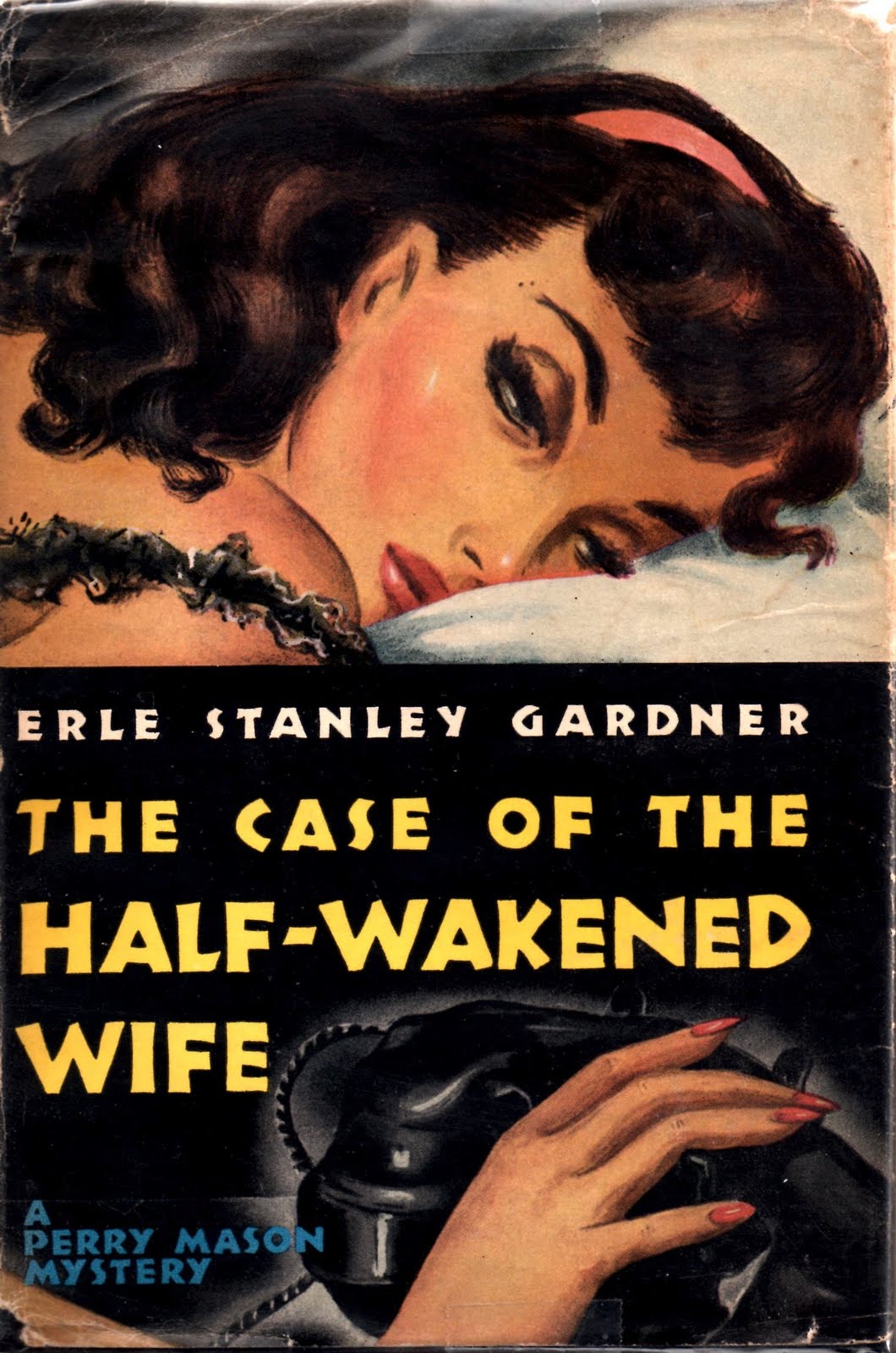
cover 4The ideal bedtime book, he says, should neither bore nore excite. Wise advice. So at night this summer I turned to Erle Stanley Gardner’s The Case of the Half-Wakened Wife, # 27 in the Perry Mason series, first published in 1945, and containing the usual cast of characters—the erstwhile counselor Perry, his girl Friday (and sometime love interest) Della Street, detective and Mason sidekick Paul Drake, and the pompous and overbearing DA, Hamilton Burger. The literary Perry Mason cracks jokes, smokes, curses, enjoys a drink, and is occasionally profane. Why Raymond Burr was ever cast as television’s Perry Mason, I’ll never know. I find Gardner’s Mason to be much more human than the unbending Burr ever was on screen. All the stories in the Perry Mason series are interesting but easy to put down and pick up the next night without losing your place. Ideal for pillow reading.

434-the-inimitable-jeevesJust for fun I tossed in P.G. Wodehouse’s The Inimitable Jeeves, a collection of short stories first published in in 1921 in the Strand Magazine. For those of you not blessed to have made their acquaintance, all the stories involve English gentleman/socialite/fop Bertie Wooster, his humble but all-knowing valet Jeeves, and Bertie’s friend and fellow Drones Club member Bingo Little. This was the second collection of Jeeves stories published, following My Man Jeeves, with the celebrated first chapter, “Jeeves Exerts the Old Cerebellum.” Wodehouse was the unparalled master at British Upper Crust Old Boy humor, and his stories have a charm, lightness, and hilarity all their own. There is a whole other universe in Wodehouse’s writing, and it’s all perfect for perusing just before turning out the lights.

Which it’s time to do for this column. Turn the page and enjoy the rest of your summer.